


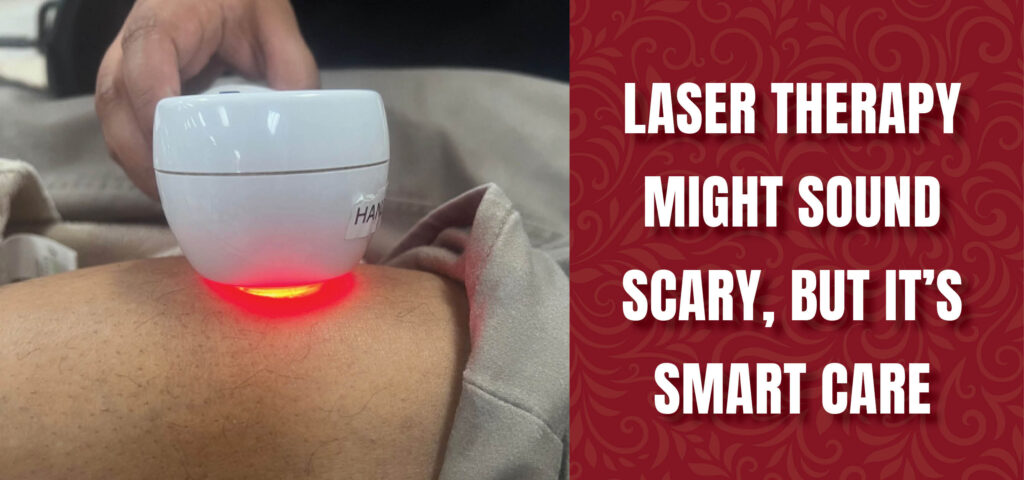
The word “laser” conjures up some pretty serious sci-fi imagery, from laser swords to massive, fiery laser beams. Perhaps that’s why people can be so intimidated by laser therapy, a safe, noninvasive treatment technique we offer at Terry Physical Therapy.
But there’s no reason to be afraid. The “laser” in “laser therapy” refers to wavelengths of light used to stimulate healing in the body’s tissues. We deliver these light waves over the skin to reduce inflammation, ease pain, and promote faster recovery by boosting cellular repair and improving circulation.
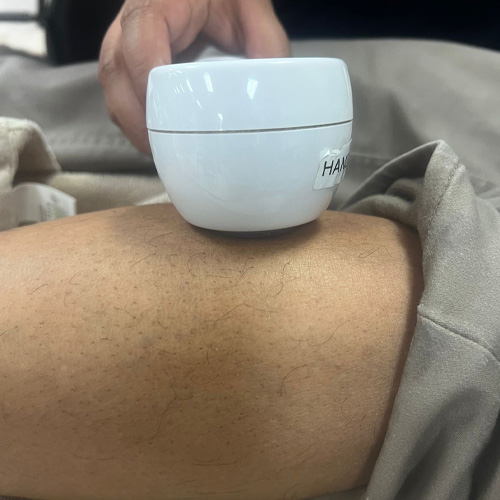
Specifically, our clinic has a Handy Cure S’ Laser, a state-of-the-art device that provides three levels of pain relief. Treatment with the laser is simple, with no noise, no invasive equipment, and no downtime.
Still, we find that many patients are hesitant to give laser therapy a shot. Today, we want to clear up some of the misconceptions about this treatment so you can make a more informed decision about whether or not it can benefit you.
Debunking Common Myths About the Handy Cure S’ Laser
Myth #1: Laser therapy is painful.
This is the most common concern we hear. It’s also completely false. The Handy Cure S’ Laser is not a cutting or burning tool. It uses a low-level laser, also known as a “cold laser,” which means there’s no heat intense enough to damage tissue.
In fact, most patients feel nothing at all during treatment, although some experience a very mild warming sensation as their circulation improves. Sessions generally last 15-20 minutes, and you can walk out the door and resume your regular routine immediately.
Myth #2: Laser therapy is experimental and unproven.
Low-level laser therapy has been studied for decades and is backed by a growing body of clinical research. It’s used worldwide to treat various conditions, from chronic joint pain to sports injuries and post-surgical swelling. The Handy Cure S’ Laser is FDA-cleared and designed for safe, everyday use in medical settings.
That said, laser therapy does work best when it’s part of a comprehensive treatment program, which is how we use it at Terry Physical Therapy. For example, we use the laser to help heal damaged tissue and reduce pain and inflammation, which prepares your body for additional physical therapy treatments, such as manual therapy and therapeutic exercise.
Myth #3: Laser therapy is only for serious injuries.
This tool helps people with all types of conditions, not just the extreme cases. We might recommend it for:
- Arthritis pain in the knees, hands, shoulders, or hips
- Chronic back pain and sciatica
- Neck pain and tension headaches
- Post-surgical swelling and slow-healing incisions
- Tendonitis, bursitis, and plantar fasciitis
- Sprains and muscle strains
Furthermore, even mild inflammation or minor injuries can benefit from increased blood flow and cellular repair. The goal of laser therapy is to facilitate your body’s natural healing process. Essentially, we want to help your body do what it’s already trying to do, just more efficiently.
Myth #4: Laser therapy takes forever to work.
Actually, many patients report relief within just a few sessions, although that can vary from patient to patient depending on the extent of the tissue damage.
However, even if you don’t necessarily feel an immediate difference, each laser therapy session still has a significant impact. Here’s a quick run-down of what laser therapy can do:
- Minimizes pain
- Reduces swelling and improves joint movement
- Facilitates tissue repair
- Improves blood circulation to the affected area
- Helps prevent stiffness or scar tissue buildup

Ready to Give Laser Therapy a Try?
Laser therapy might sound futuristic, but at Terry Physical Therapy, it’s already helping people like you feel better every day. The Handy Cure S’ Laser is safe, comfortable, and an important part of a hands-on, personalized treatment plan built around your goals.
Schedule an appointment with us today to learn if laser therapy is right for you, especially if you’re dealing with pain and inflammation. Our team is dedicated to finding the right treatment for your needs–including harnessing the futuristic power of lasers!

Bright, citrusy orange meets tart cranberry in this deliciously moist Orange Cranberry Bread, perfect for breakfast or a cozy afternoon snack. Enjoy a slice fresh out of the oven or toasted with a bit of butter for a comforting treat!
Feel Better by Eating Better!
Orange Cranberry Bread
- 2 cups white whole wheat flour
- 1/2 cup sugar
- 1 teaspoon baking powder
- 1/2 teaspoon baking soda
- 1/2 teaspoon salt
- 1 cup fresh cranberries
- 1 teaspoon orange zest
- 1/3 cup coconut oil, melted
- 3/4 cup fresh orange juice
- 1 egg
Grease an 8×4 inch loaf pan. Set aside. Preheat oven to 350° F. In a large bowl, add white whole wheat flour, sugar, baking powder, baking soda, salt, cranberries, and orange zest. Gently stir. In a separate medium-sized bowl, add coconut oil, fresh orange juice, and an egg. Add wet ingredients to dry ingredients. Stir to combine everything together. Scrape the batter into the prepared loaf pan. Bake for 30-35 minutes. Remove and let cool for 5 minutes. Serve and enjoy!
Exercise of the Month
ERGONOMIC STRETCH
Feeling stiff at your desk? Try this simple ergonomic stretch to relieve tension, improve posture, and keep your body moving—even while you work!
You Deserve to Feel Your Best!
Ready to continue your progress? Schedule your next appointment with Terry Physical Therapy today, and let’s get you back to feeling your best! Whether you’re recovering from an injury or maintaining your wellness, we’re here to support you every step of the way.
June Word Scramble
cresunnse
teaaldcsns
miwsmngi
avoatnic
gdenidw
refiifsle
Answer Key
sunscreen
sandcastle
swimming
vacation
wedding
fireflies

5 Pool Exercises For a Full-Body Workout
Exercising in water can provide a great full-body workout without some of the drawbacks of land-based exercises.
1. Walk in water. It targets your arms, core, and lower body. Keep your arms in the water and move them as you walk. Engage your core and stand tall.
2. Water arm lifts. Using foam dumbbells will help add more resistance. Stand in water up to your shoulders. Hold the dumbbells at your side, with your palms facing up. Draw your elbows in close to your torso as you lift your forearms to the height of the water. Rotate your wrists to turn your palms facedown. Lower your arms back to the starting position. Do 1-3 sets of 10-15 reps.
3. Lateral arm lifts. This exercise, which targets your upper body, is also best done with foam dumbbells. Stand in water up to your shoulders. Hold the dumbbells at your side. Raise your arms to the side until they’re level with the water and your shoulders. Lower your arms back down to your sides. Do 1-3 sets of 8-14 repetitions.
4. Back wall glide. This exercise helps to activate the muscles in your core and lower body. Hold onto the pool ledge, tuck your knees into your chest, and press your feet into the wall. Push off from the wall and float on your back as far as you can. Draw your knees into your chest, press your feet down to the bottom of the pool, and run back to the wall. Continue this exercise for 5-10 minutes.
5. Leg kicks. This exercise works the muscles in your core and legs. Use ankle weights to make it more challenging. Hold onto the pool ledge or hold a kickboard. Alternate flutter kicking, scissor kicking, breaststroke kicking, and dolphin kicking. Do each kick for 1-3 minutes.
Water workouts are an effective way to boost your cardio fitness while strengthening your major muscle groups, but as with any new exercise program, always speak to your physical therapist first. Contact Terry Physical Therapy to see if aquatic exercise is right for you!

Follow Us on Social Media!
Thank You for Subscribing to Terry Physical Therapy
Meet Our Team




Administration

Marsha Terry
RN MSN- Administrator

Letty Rosales
Office Manager

Monica Gutierrez
Billing Manager