
What a Full Post Rotator Cuff Surgery Rehabilitation Actually Requires
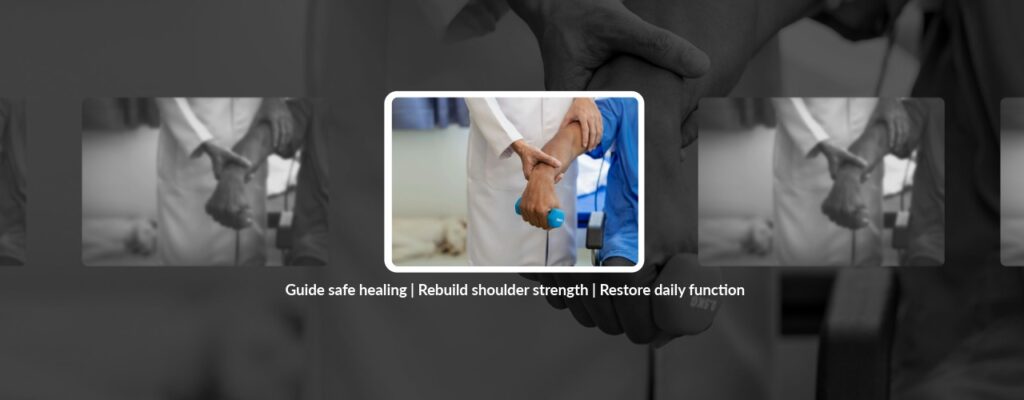
Completing an orthopedic shoulder operation is a major milestone, but the surgical mend is only the initial step toward regaining your normal active lifestyle. True upper body recovery relies on a carefully structured process of tissue protection, gradual movement, and targeted strengthening. Embarking on a comprehensive post rotator cuff surgery rehabilitation program requires a deep understanding of how healing tissues respond to daily physical workloads. Our clinical team works with you to balance the surgeon’s structural guidelines with your personal functional goals. This collaborative approach ensures that your shoulder joint regains its original resilience safely without risking any structural setback.
How Clinicians Guide the Healing Process
An operative repair physically reattaches the torn shoulder tendon back onto the upper arm bone. Our physical therapists know that this surgical bond remains delicate during the first few weeks as your body lays down new collagen fibers. We look at your recovery as a progressive journey where movement is introduced in highly specific, controlled stages. In the beginning, our clinical reasoning focuses entirely on keeping the joint calm while maintaining secondary mobility in the neck, elbow, and wrist. As the tendon successfully integrates with the bone, we gradually increase the physical demand to encourage the tissue to become thicker and stronger.
What We Discuss in Your Initial Evaluation
During our very first conversation, our physical therapists learn about the specific details of your surgical procedure and your personal lifestyle goals. We want to know what tasks you need to return to, whether that involves lifting heavy tools at work, playing recreational sports, or simply brushing your hair comfortably. Our physical therapists will ask about your current comfort levels when resting, how you manage your sleeping positions, and how much assistance you need with daily self-care. These practical insights allow us to build a customized plan that respects your body’s unique timeline.
What a Comprehensive Post Rotator Cuff Surgery Rehabilitation Plan Looks For
When you arrive for your movement assessment, our physical therapists look at the functional capabilities of your entire upper body. We gather essential baseline findings using clear, non-technical metrics to track your progress over time.
Passive Joint Gliding
Assessing how smoothly your arm bone moves when our therapists gently support the full weight of your limb.
Shoulder Blade Control
Checking how well your upper back muscles coordinate to stabilize your trunk during small movements.
Postural Adaptation
Noticing if you are holding your neck or spine in a stiff, guarded position to protect the healing arm.
Muscle Endurance
Evaluating the strength of your forearm and grip to ensure you can perform basic tabletop tasks safely.
How Our Team Shapes Your Individual Plan
We combine the specific protocols provided by your orthopedic surgeon with our unique functional findings to map out your care. If the assessment shows that your neck and upper back have become rigid from wearing a protective sling, our physical therapists incorporate gentle spinal movements early on. We adjust the pace of your program based on how your shoulder responds to daily activities, ensuring we never overload the tendon before it is ready. This careful customization allows us to advance your exercises safely while keeping your overall sensitivity low.
Functional Treatment Highlights
Our physical therapists use a variety of evidence based strategies to help you navigate every stage of your recovery journey successfully.
Passive and Assisted Range of Motion
We manually guide your arm through safe paths to prevent joint stiffness without contracting the healing tendon.
Scapular Stabilization Training
Enhancing the endurance of your upper back muscles to create a stable foundation for future lifting.
Progressive Rotator Cuff Conditioning
Introducing low-load active movements to rebuild the stamina of the repaired muscle group.
Real World Functional Simulations
Rehearsing specific reaching and pushing patterns to prepare your arm for your actual work or hobby requirements.
Practical Strategies for Your Home Routine
Your home program provides safe, daily habits that reinforce the work completed during your clinical sessions.
- Use your opposite arm to gently assist with small, pain-free movements as directed by your clinical team.
- Apply a cold compress to the upper joint after your home movements to minimize local tissue sensitivity.
- Support your elbow with a firm pillow when resting on the couch or sleeping to prevent the shoulder from dropping backward.
Clear Markers of Your Post Rotator Cuff Surgery Rehabilitation Progress
Real improvement during post rotator cuff surgery rehabilitation shows up in your everyday abilities before your total strength returns. You will first notice an increase in your movement confidence, allowing you to relax your arm naturally when resting in a chair. Next, your passive mobility will expand, meaning your therapist can guide your arm higher without encountering rigid resistance. Eventually, your active muscle endurance improves, allowing you to reach for a glass or wash your face without experiencing early fatigue.
Secure a Smooth Recovery Journey
You do not have to navigate the complex stages of post rotator cuff surgery rehabilitation on your own. When you contact Terry Physical Therapy to schedule an evaluation, your initial visit focuses completely on understanding your surgical history and setting your baseline movement goals. Our physical therapists will explain your rehabilitation guidelines in plain language and provide a clear, step-by-step path to help you rebuild your strength.
To find out how a structured movement plan can safely restore your reaching freedom and upper body strength, contact our front desk team at Terry Physical Therapy to book your post-operative assessment.